Embroidery works
Embroidery is one of the oldest forms of textile practice, with origins that date back thousands of years across diverse cultures.
In early societies, it existed alongside other forms of adornment, such as jewellery and tattooing, situating the individual within social, cultural, and spiritual frameworks. The history of embroidery allows us to read the belief systems of different communities and to place works within specific times and geographies. Colour, texture, and material operate together as tools of storytelling, carrying meaning across generations.
Textile work has always been a significant source of inspiration for my jewellery. In fact, the reason I have been so drawn to casting as a technical process is its capacity to translate organic and applied textures into metal, a material otherwise defined by hardness and rigidity. Through casting, I can carry the language of textiles into a more enduring material form.
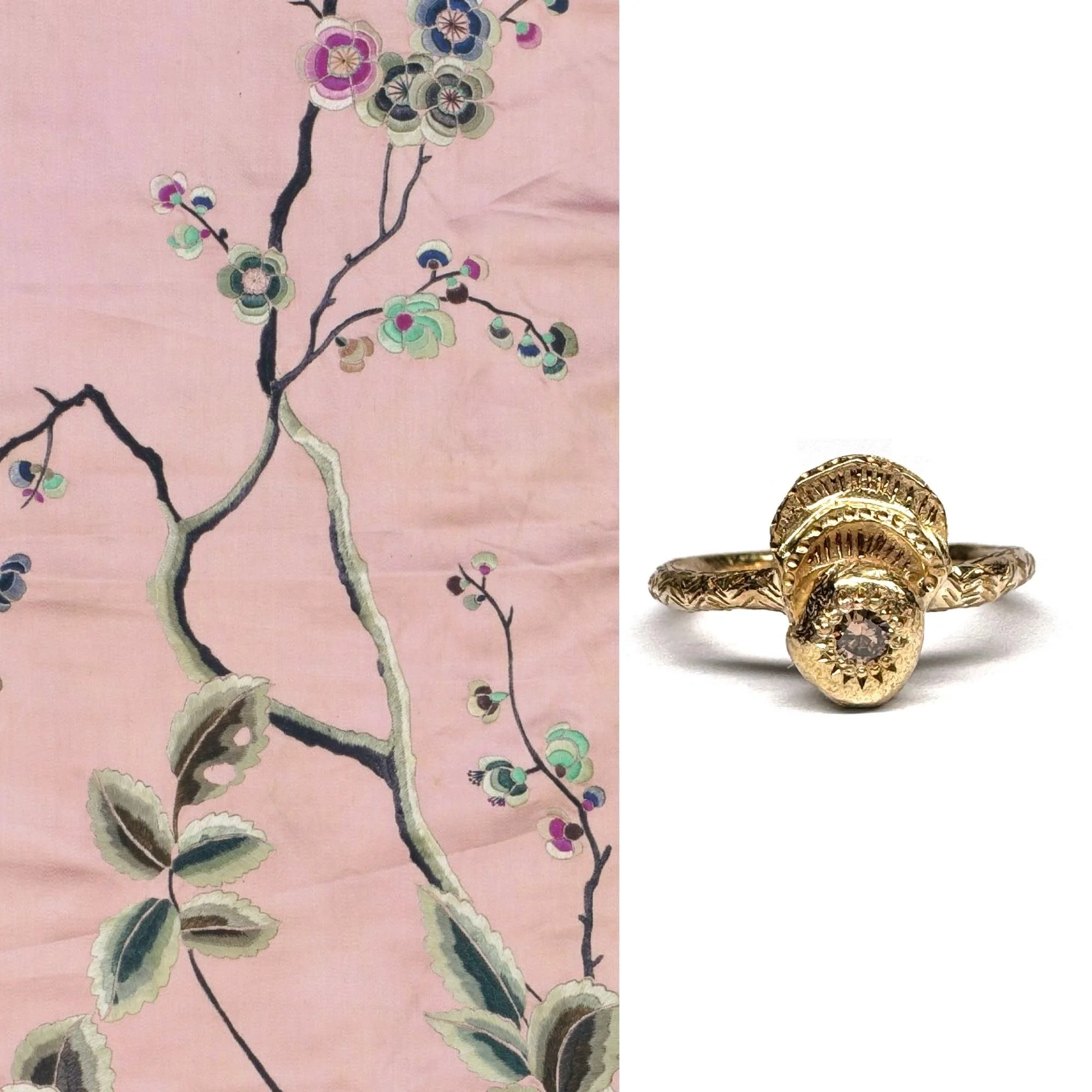
Detail image from - Embroidery: Italian Fashion. Federico Rocca. Damiani Editore. 2006
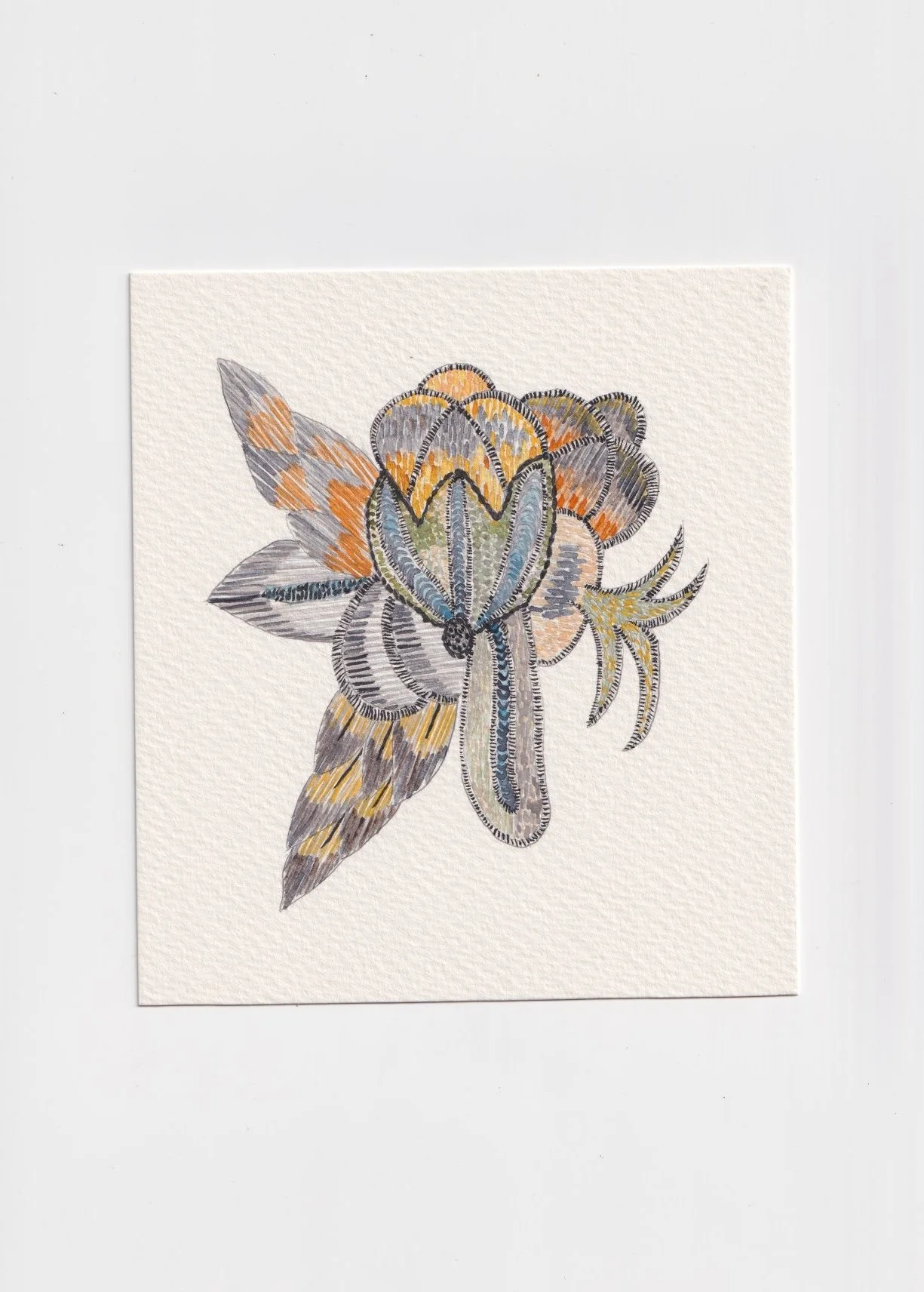
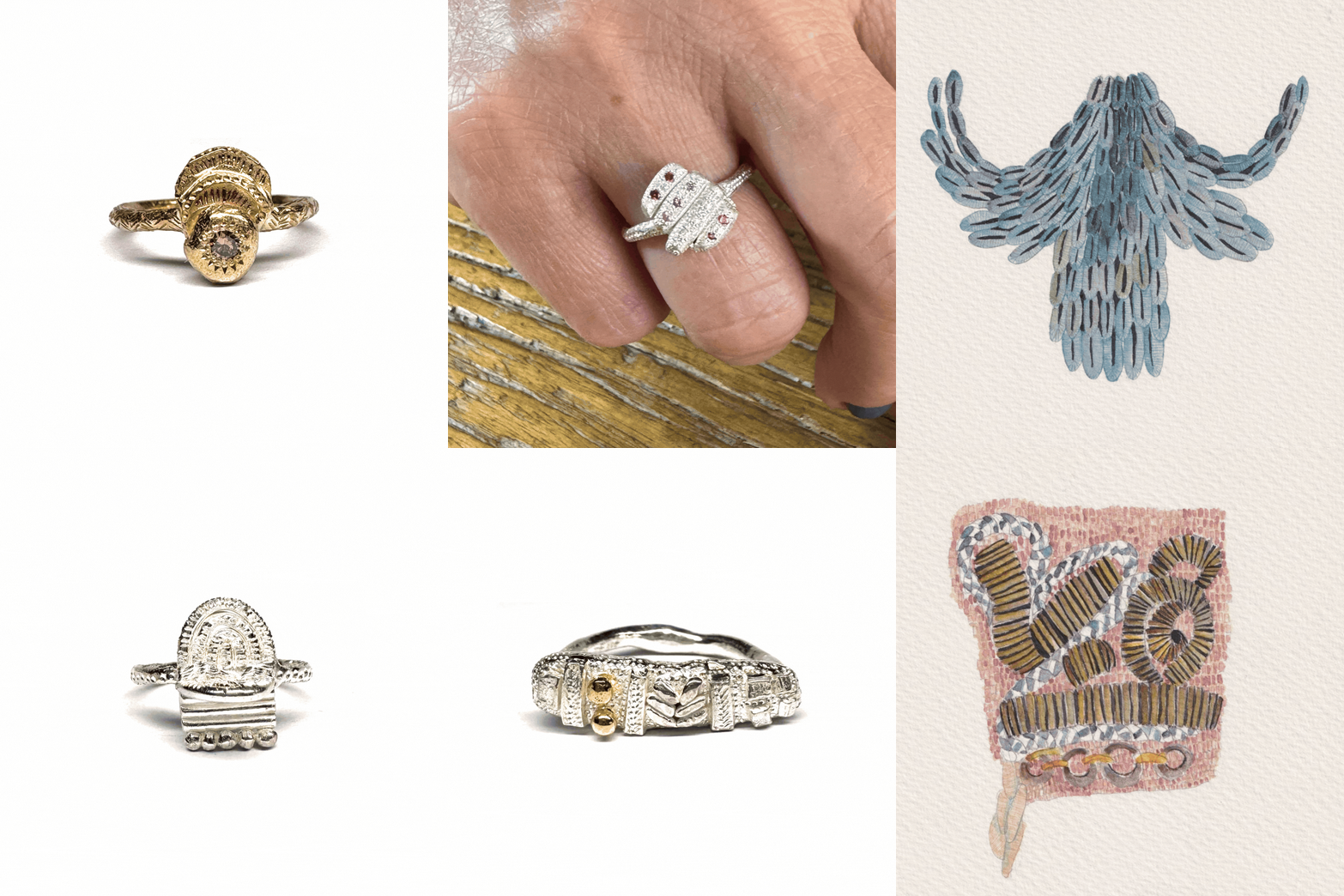
Watercolour #3, 150mm x 163mm, 100% cotton paper, 300 gsm
My Makers Mark, the stamp used to mark and identify work made by me, is a line rendering of the warp and weft of fabric. I chose this instead of my initials, KB, for two reasons. The first being, I did not see the need to identify my work; I am happy with anonymity. However, the jewellery spaces that I sold my work at required this, so I obliged and had this symbol made into a stamp.
The second reason was that, at the time, I was deeply influenced in my work by the cultural theorist Trinh T. Minh-Ha, most notably by her book Woman, Native, Other. Writing, Post Coloniality and Feminism. Amongst many other important issues, the author writes about the significance of storytelling, especially as a cultural tool for creating meaning. The oral tradition of storytelling is highlighted, as is the manual labour of weaving, and how different cultures pass on stories through everyday acts such as cooking, textiles, and shared labour. Difference is celebrated and embraced.
This new body of work has drawn inspiration from embroidery motifs. For the watercolour collection, I primarily looked at early English embroidery. My idea was to isolate a small section, then redraw it and then play with the form until I had a drawing that I could translate into metal. The watercolours and rings do not match and are not intended to. Rather, they are considered disparate images that coexist within a shared embroidery vocabulary.
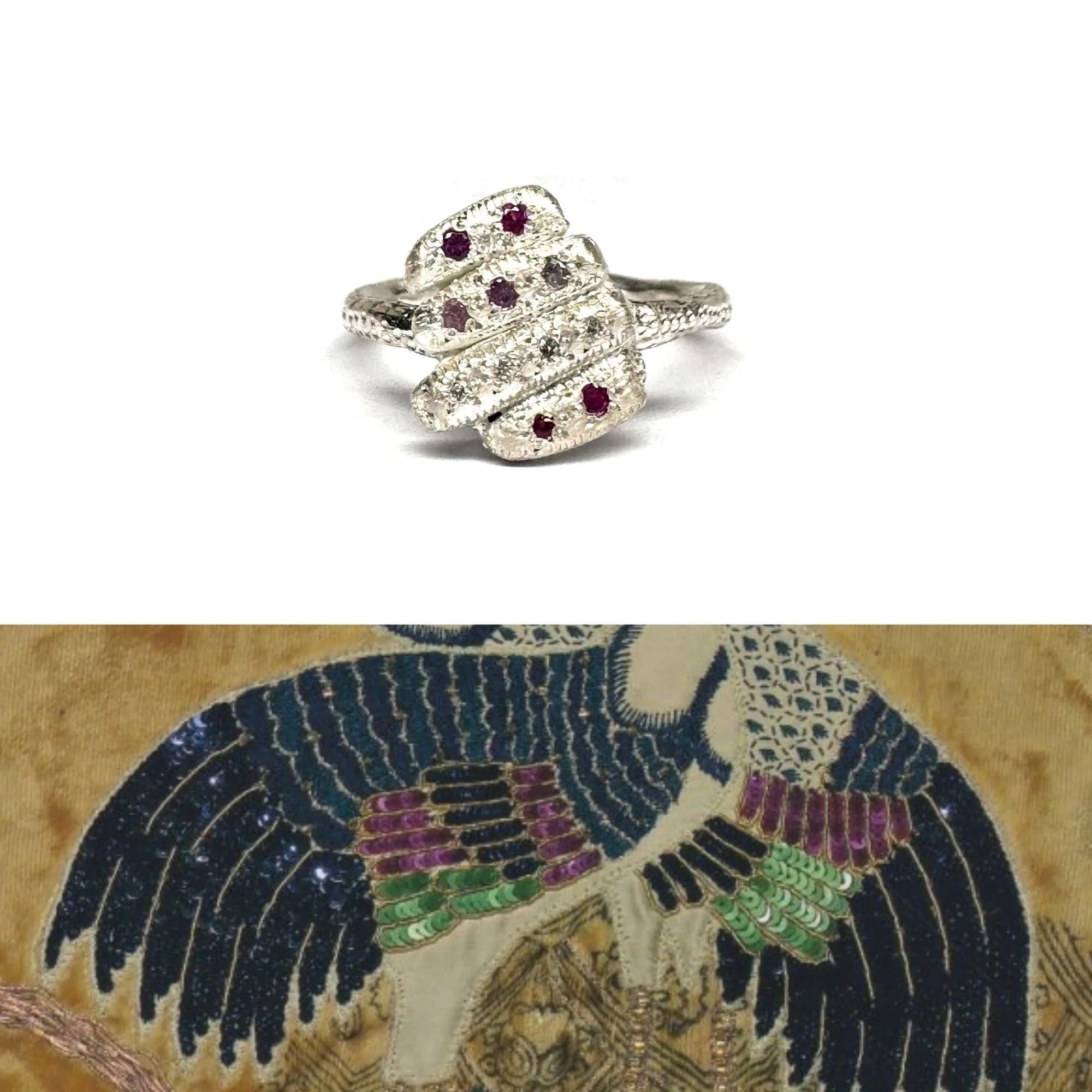
Detail image from - Embroidery: Italian Fashion. Federico Rocca. Damiani Editore. 2006
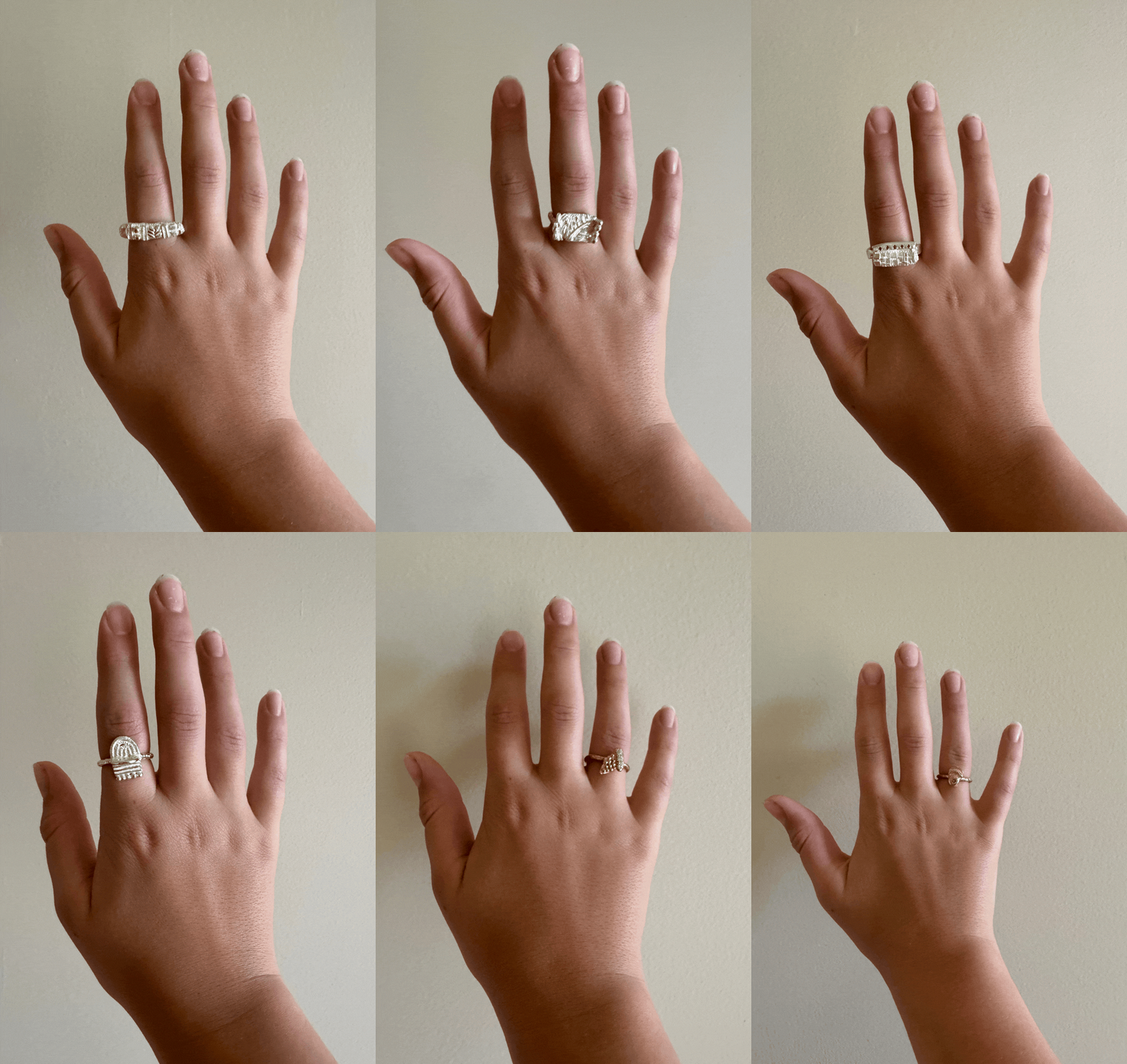
This collection includes eight new rings and four watercolour and ink drawings.